


How to Pack a Bicycle for Shipping
Professional Moving
Shipping to 159+ countries
Door-To-Door Service
How to Properly Pack a Bicycle for International Shipping
Shipping a bicycle internationally requires careful preparation. At Neva Logistics, we handle air, sea, and road cargo to over 159 countries. Proper packing protects your bike from damage during handling, transit, and customs procedures. A well-packed bicycle also helps avoid extra fees or delays.
Incorrect packaging can lead to scratches, bent rims, damaged disc rotors, or issues with lithium batteries on e-bikes. Follow this step-by-step guide to ensure your bike arrives safely.
1. Required Packing Materials
- Strong bike box — Use a triple-wall or heavy-duty double-wall cardboard bike box (recommended for international shipments). Standard bike shop boxes are often suitable if in good condition.
- Foam pipe insulation (for frame tubes).
- Bubble wrap and extra cardboard sheets.
- Zip ties, strong packing tape (48–72 mm), and dropout protectors (or axle spacers).
- Small labeled zip-lock bags for bolts and small parts.
- Warning labels: Fragile, This Side Up, Bicycle, Do Not Stack, and Heavy (if over 25 kg).
Neva Logistics tip: Keep the total weight per box under 30 kg when possible. Provide exact dimensions (L × W × H in cm) and weight when requesting a quote — this helps us choose the best transport method.
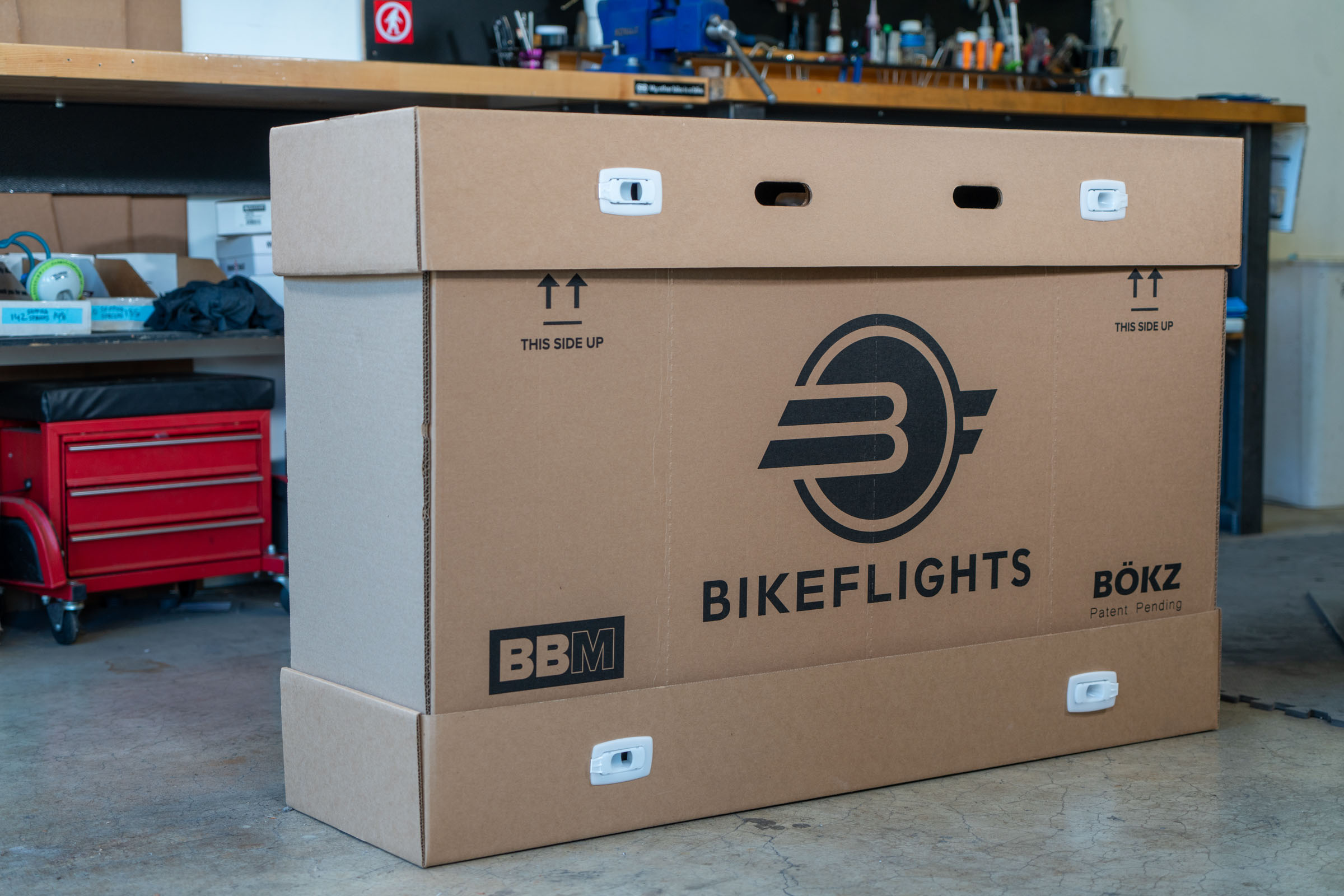
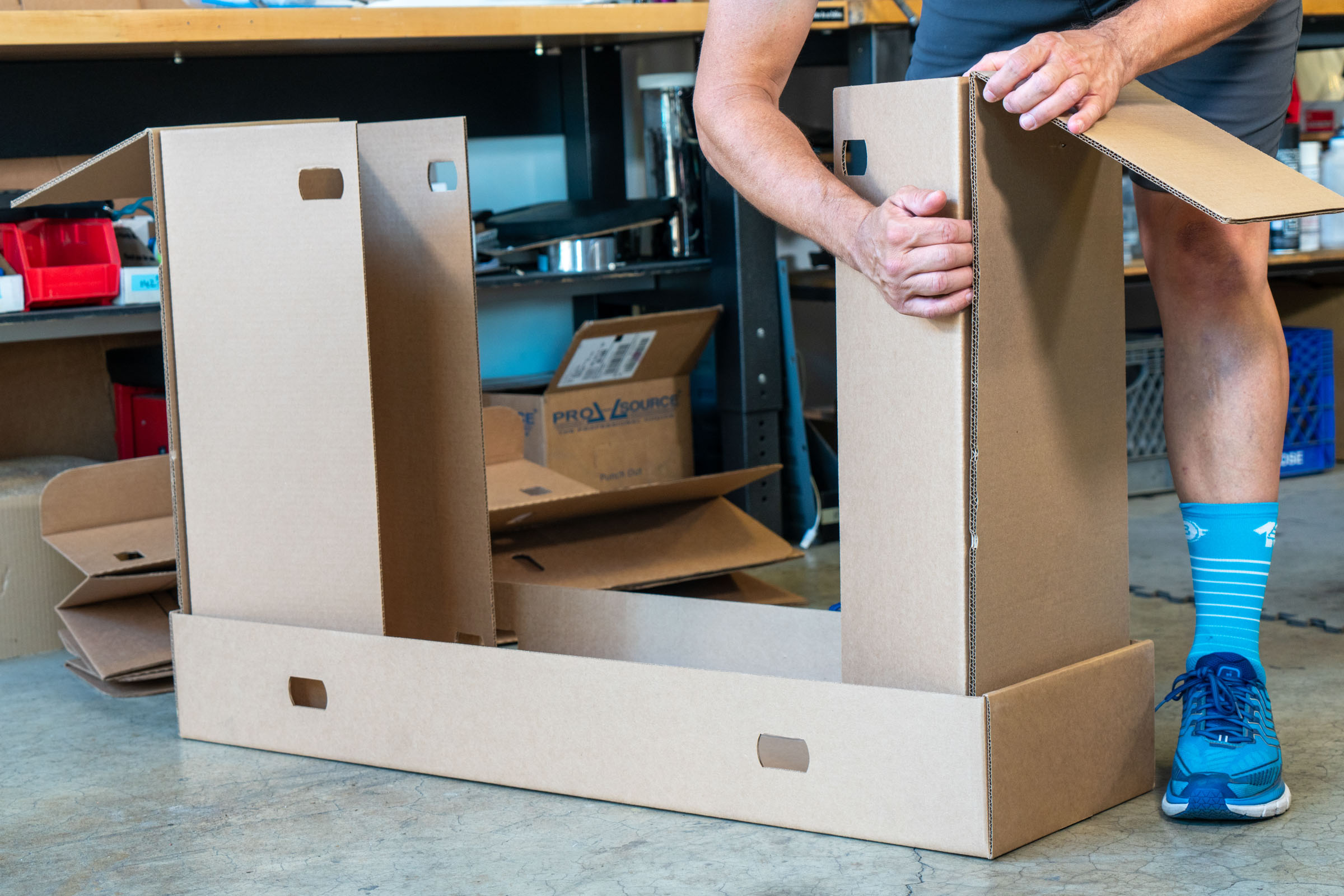
Typical strong cardboard bike box used for international shipping.
2. Step-by-Step Packing Instructions (Photo Guide)
Step 1: Prepare and clean the bike Clean and dry the entire bicycle. Take photos of the assembled bike (especially handlebars, cables, and drivetrain) for easier reassembly later.
Step 2: Disassemble
- Remove pedals and store them in a labeled bag.
- Lower or remove the saddle and seatpost.
- Remove the front wheel (rear wheel can stay or be removed).
- Turn the handlebars parallel to the frame or remove them.
- Protect the rear derailleur by shifting to the largest cog and securing it.
Step 3: Protect vulnerable parts
- Wrap frame tubes with foam insulation.
- Cover disc rotors with cardboard.
- Insert spacers into fork and rear dropouts to prevent crushing.
- Wrap handlebars, chain, and protruding parts with bubble wrap.

Frame protected with foam tubes — a key step to prevent scratches and dents.
Step 4: Pack into the box
- Line the bottom with bubble wrap or cardboard.
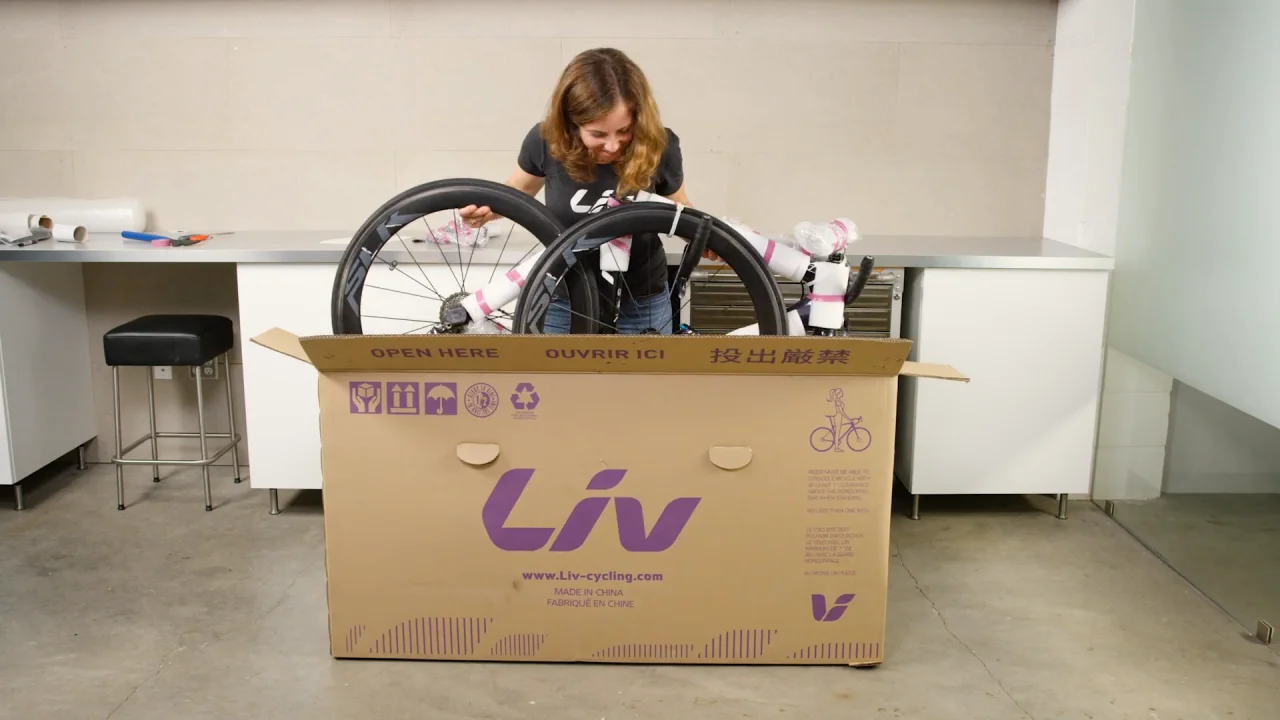
- Place the frame first, then wheels (separated by cardboard to avoid contact with rotors or cassette).
- Fill all empty spaces with padding so nothing moves.
- Attach small parts bags to the inside of the box.

Examples of properly packed bicycles inside the box — wheels separated, frame padded, and gaps filled.
Step 5: Seal and label
- Close the box using H-taping method (tape across seams and edges).
- Apply all warning labels clearly.
- Write sender/receiver details on multiple sides.
Ready-to-ship bike box with proper labeling.
3. Special Considerations for Different Bike Types
| Bike Type | Key Packing Tips | Neva Logistics Recommendation |
|---|---|---|
| Road / Gravel / Carbon | Extra padding on frame; very fragile | Triple-wall box + maximum foam |
| Mountain Bike | Heavy wheels; protect suspension | Strong box, dropout spacers |
| E-bike | Remove battery if possible; declare lithium battery | Provide battery specs (Wh rating) when booking |
| Folding / Kids | More compact — may fit in smaller box | Standard bike box usually sufficient |
Important for e-bikes: Lithium batteries are classified as dangerous goods. They often require special packaging, documentation, and UN declarations. Always inform Neva Logistics of the exact battery model and watt-hour rating when requesting a quote. We will check compatibility with air, sea, or road routes.
4. Neva Logistics Requirements and Tips
- Clearly mark every box with full addresses and contact phones.
- Use “This Side Up” arrows and “Fragile” stickers.
- For sea or road freight, palletizing the box (with stretch wrap) is optional but recommended for added protection.
- Avoid over-inflating tires — slightly deflate them.
- Do not tape anything directly onto paint or carbon surfaces.
Common mistakes to avoid:
- Leaving empty space inside the box (parts will shift).
- Allowing wheels and frame to touch unprotected.
- Forgetting to protect disc brakes or chain.
5. Professional Packing Service
If you prefer not to pack the bike yourself, contact us. Our partners in major cities can professionally disassemble, pack, and collect your bicycle.
Ready to ship? Submit your request on the International Cargo page or contact our team. Provide bike type, dimensions, weight, origin, and destination — we will calculate the best and safest option for you.
Would you like us to add this article to your website, translate it into other languages, or include specific route examples (e.g., Europe to USA, Asia to Europe)? We can also prepare a shorter version or PDF download.
Related packing guides
More step-by-step tips for common items.
Packing tips: 0–30 kg & 30 kg+ pallets
Box strength, cushioning, H-taping, labels; pallet strapping and stretch-wrap.
Packing a TV
Screen protection, corner guards, rigid five-layer box preferred.
Packing a piano
Crating, keys cover, strap points, centre-of-gravity control.
Packing dishes & glassware
2–3 layers of wrap, vertical plates, honeycomb dividers, void fill.
Packing furniture
Edge guards, foam sheets, rigid shrouds; disassemble where possible.
Packing home appliances
Drum locks, hose drain, rigid box or crate; keep upright arrows visible.
